
Is Georgia Safe for Solo Travelers? Everything You Need to Know
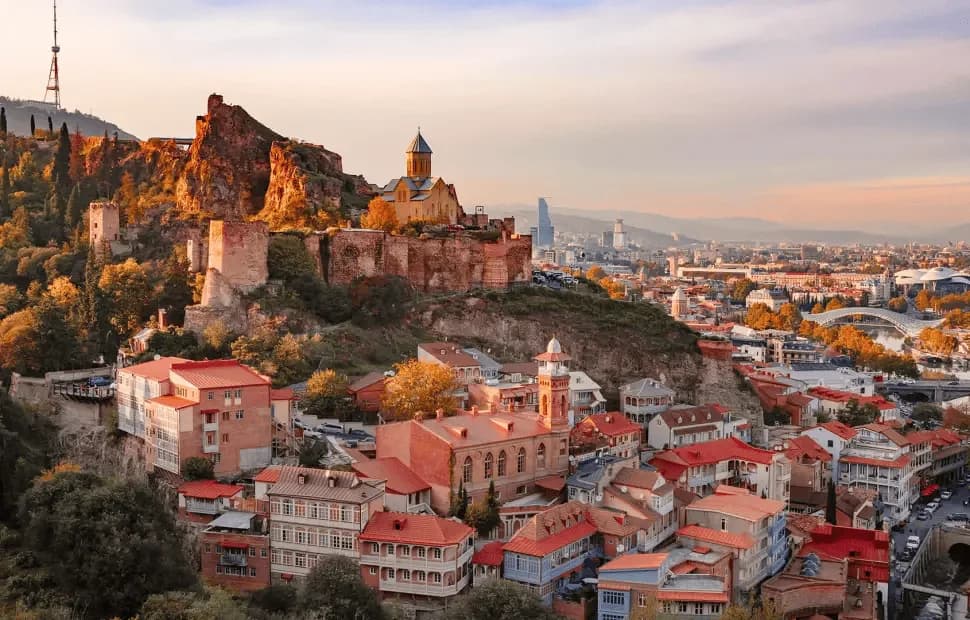
The question comes up in every Georgia travel forum, every backpacker group chat, every first-time visitor's research phase: is Georgia safe?
The short answer is yes — emphatically, and with very few caveats.
The longer answer is what this guide is for. Because "safe" means different things to different travelers. It means something different to a solo woman than to a group of men. It means something different in Tbilisi than in a remote mountain village. It means something different at 2pm than at 2am.
What follows is an honest, practical, and comprehensive guide to solo travel safety in Georgia in 2026 — built on real experience rather than blanket reassurance.
The Overall Picture: Georgia's Safety Reputation
Georgia consistently ranks as one of the safest countries in Europe and Central Asia for travelers. The numbers bear this out:
Georgia ranks in the top 20% globally for personal safety in the Global Peace Index
Violent crime against tourists is extremely rare and consistently makes national news when it occurs — a sign of how unusual it is
Petty theft, while it exists, is significantly less prevalent than in most Western European tourist destinations
The hospitality culture (stumarmaspindzloba — the Georgian tradition of guest-welcoming) is genuine and deep, not performative. Strangers genuinely want to help you.
Travelers who have visited Georgia frequently describe it as feeling safer than they expected — often safer than their home cities.
Safety by Region
Georgia is not uniformly the same experience everywhere. Here is an honest breakdown by area:
Tbilisi
Georgia's capital is safe by any reasonable measure. The Old Town, Rustaveli Avenue, Vake, and Saburtalo neighborhoods are all comfortable for solo travelers at any hour. As with any city, late-night awareness in less-lit areas makes sense — not because crime is common but because basic urban caution always applies.
The Gldani and Varketili outer districts are residential and less tourist-oriented — not dangerous, but no particular reason to visit them as a traveler.
Nightlife: Tbilisi has a genuinely thriving nightlife scene centered on clubs like Bassiani and Fabrika. These are generally safe environments, though standard nightlife common sense — watch your drink, know how you're getting home — applies as it would anywhere.
Mountain Regions (Kazbegi, Svaneti, Tusheti)
Georgia's mountain regions are safe for travelers. The communities here are conservative and deeply hospitable — solo travelers, including solo women, consistently report feeling more looked-after, not less safe, in mountain villages than in cities.
The safety considerations in mountain regions are environmental rather than social: weather changes fast, trails can be poorly marked, altitude sickness is a real factor above 2,500 meters, and some roads require 4x4 vehicles and experienced drivers. These are hazards to plan around, not reasons to avoid the mountains.
Western Georgia (Kutaisi, Batumi, Samegrelo)
Western Georgia is safe and welcoming. Batumi — Georgia's Black Sea resort city — has a more international, cosmopolitan character than Tbilisi and is extremely comfortable for solo travelers. The Samegrelo and Guria regions are rural and traditional — excellent hospitality, minimal tourist infrastructure, very safe.
Border Regions
The areas near South Ossetia and Abkhazia — both Russian-controlled breakaway territories — should be avoided. Do not attempt to enter either territory. The Administrative Boundary Lines are clearly marked, and your tour operator or guesthouse will advise you clearly.
The area near the Azerbaijan and Armenia borders is entirely normal and safe. The border crossing at Sadakhlo (to Armenia) and Red Bridge (to Azerbaijan) are standard international crossings used by tourists regularly.
Solo Female Travel in Georgia
This deserves its own section, because it comes up constantly — and the honest answer is more nuanced than a simple yes or no.
The Good News
Georgia is genuinely welcoming to solo female travelers. The vast majority of women who travel here alone report feeling comfortable, respected, and well-looked-after. Georgian hospitality culture extends to solo female guests in a way that often surprises visitors — guesthouse owners who become de facto family, strangers who insist on walking you to your destination, fellow diners who send food to your table.
Serious harassment and assault of female tourists is rare and consistently reported when it occurs. The risk level is comparable to or lower than most Southern and Eastern European countries.
Things to Be Aware Of
Georgian society is traditional and conservative in many areas, particularly outside Tbilisi. This manifests less as aggression and more as:
Persistent but generally benign attention in some areas — men may try to engage in conversation, offer to show you around, or express interest in a way that can feel overwhelming even if it is not threatening
Conservative expectations around dress in religious sites and rural villages — covering shoulders and knees is both respectful and practical in reducing unwanted attention
Drinking culture — being offered wine or chacha constantly is part of Georgian hospitality; it is perfectly acceptable to decline, and "I don't drink" (ar vsvam) is respected without pressure in most contexts
Practical Tips for Solo Female Travelers
Stay in well-reviewed guesthouses where the owner is known and accessible — Georgian guesthouse hosts take genuine personal responsibility for their guests' wellbeing
Trust your instincts — Georgian culture is generally not threatening, so if something feels off, it probably is
Learn a few words of Georgian — even basic phrases (gmadlobt — thank you, ara — no) are received with warmth and demonstrate respect
Book guided tours for remote areas — not because they are dangerous alone, but because a local guide adds genuine security and local knowledge in mountain environments
Share your itinerary with someone at home and check in regularly
Transport Safety
Taxis & Rideshare
Bolt is the dominant rideshare app in Georgia and is the recommended way to get around Tbilisi and other cities. It is safe, affordable, and eliminates any fare negotiation issues. Always use the app rather than flagging taxis on the street, where overcharging of tourists is common.
Outside Tbilisi, agree on the fare before getting in any unmarked taxi. The fare should be negotiated in advance and confirmed clearly.
Marshrutkas (Shared Minibuses)
Georgia's network of marshrutkas connects virtually every town and village in the country. They are cheap, authentic, and generally safe — drivers know their routes well. The safety consideration is driving style rather than personal safety: Georgian mountain road driving can be dramatic for the uninitiated. If you are prone to motion sickness, sit near the front.
Rental Cars
Georgia has a right-hand traffic system and roads that range from excellent (main highways) to genuinely challenging (mountain tracks). An international driving permit is required alongside your home license. Mountain roads in Kazbegi, Svaneti, and Tusheti require genuine 4x4 vehicles and experience — renting a standard car and attempting these routes is a common source of problems for independent travelers.
Night Buses & Long-Distance Transport
Overnight buses between Georgian cities are generally safe. Keep your valuables in a bag in front of you or under your feet rather than in overhead compartments.
Health & Medical Safety
Medical Facilities
Tbilisi has several good private hospitals and clinics with English-speaking staff. Aversi Clinic and Iashvili Children's Hospital (for pediatric emergencies) are well-regarded. Outside Tbilisi, medical facilities are more limited — the nearest hospital to Kazbegi, for example, is back in Tbilisi.
Travel insurance with medical evacuation coverage is essential for any traveler planning to visit mountain regions.
Water
Tap water in Tbilisi is generally safe to drink — it comes from mountain springs and is consistently tested. Outside the capital, bottled water is inexpensive and widely available. In mountain villages, spring water is typically excellent quality.
Altitude
Kazbegi sits at 1,740 meters — low enough that altitude sickness is uncommon but possible for some travelers. The Gergeti Trinity Church hike reaches 2,170 meters. Tusheti and Svaneti hikes can reach 3,000+ meters. Ascend gradually, stay hydrated, and descend immediately if you experience severe headache, nausea, or disorientation.
Food Safety
Georgian food hygiene standards in established restaurants are generally good. Street food and market purchases carry the usual moderate risk — buy from busy stalls with high turnover. Raw vegetables in salads are generally fine in Tbilisi; in very rural areas, stick to cooked food if your stomach is sensitive.
Common Scams & How to Avoid Them
Georgia has far fewer tourist scams than most comparable destinations, but a few patterns are worth knowing:
Taxi overcharging: Avoid by using Bolt exclusively in cities and agreeing fares in advance outside them.
Fake wine: In tourist-heavy areas, some vendors sell low-quality or mislabeled wine at premium prices. Buy wine from established shops (Gbane, Wine Gallery, or direct from wineries) rather than street vendors.
Unsolicited "guides": In Mtskheta and other heritage sites, unofficial guides sometimes attach themselves to solo travelers and expect payment at the end. Politely but firmly decline at the start if you haven't booked a guide.
Currency exchange: Use ATMs (widely available, reliable) rather than street exchange booths, which occasionally offer poor rates or short-change. Bank of Georgia and TBC Bank ATMs are the most reliable.
Solo Travel Logistics: Practical Essentials
Connectivity
Georgian SIM cards are cheap and easy to obtain at Tbilisi airport or any phone shop — Magti and Geocell both offer good data packages for around $5–10 for a month of data. Coverage is excellent in cities and along main highways; mountain areas have variable signal.
Language
Georgian (Kartuli) uses its own unique script and is not related to any other language family — don't expect to decipher signs easily. However:
English is widely spoken in Tbilisi's tourist areas, hotels, and among younger Georgians nationwide
Russian is useful outside Tbilisi and among older generations
Google Translate's camera function handles Georgian script reasonably well for menus and signs
Money
Georgia is largely cash-based outside Tbilisi's tourist areas. Carry local currency (Georgian Lari — GEL) for markets, guesthouses, and rural areas. Cards are accepted in most Tbilisi restaurants and hotels. ATMs are widely available in cities and larger towns.
Accommodation
Georgia has excellent accommodation at every price point:
Guesthouses (gasthaus): The best solo travel option in smaller towns and villages. Typically family-run, breakfast included, deeply hospitable. From $15–30/night.
Hostels: Good quality in Tbilisi — Fabrika Hostel, Envoy Hostel, and others have strong solo traveler communities.
Boutique hotels: Tbilisi's Old Town has outstanding options from $60–150/night.
Airbnb: Widely available in Tbilisi; less so in rural areas.
Emergency Contacts
Service | Number |
|---|---|
Police | 112 |
Ambulance | 112 |
Fire | 112 |
Tourist Helpline | 1505 (Georgian National Tourism Administration) |
UK Embassy Tbilisi | +995 32 227 4747 |
US Embassy Tbilisi | +995 32 227 7000 |
Save 112 in your phone — it is Georgia's universal emergency number and operators speak English.
The Bottom Line
Georgia is one of the most rewarding solo travel destinations in the world right now — genuinely safe, extraordinarily hospitable, and offering experiences that range from ancient monasteries to cutting-edge nightlife to mountain wilderness, all at prices that make most European destinations look expensive by comparison.
The travelers who struggle in Georgia are usually those who underestimate the mountain environments, overestimate their ability to navigate remote areas without local knowledge, or try to self-drive routes that genuinely require experienced local drivers.
The travelers who thrive here — and there are many of them, returning year after year — are those who approach Georgia with curiosity, basic preparation, and a willingness to accept the hospitality that will be pressed upon them at every turn.
🎯 Travel Georgia With Confidence
Whether you're a first-time solo traveler or an experienced independent explorer, our local guides add genuine value — local knowledge, language, access, and the kind of insight that turns a good trip into an extraordinary one.
👉 Browse Solo-Friendly Georgia Tours →
Traveling to Georgia solo? Drop your questions in the comments — our team answers every one, honestly.
Written by Author
Author