
Kakheti Small Group Wine Tasting Guide 2026
The Wine That Started It All — 8,000 Years Ago, Right Here
There's a moment that happens to almost every visitor in Kakheti. You're standing in a low stone cellar, cool and dim, the smell of earth and fermentation all around you. A winemaker lifts a wooden lid from the floor, and below it — buried in the ground like a secret — is a qvevri: a giant clay vessel, sealed with beeswax, holding wine that has been fermenting in complete silence for six months.
He hands you a ladle. You taste.
It's unlike anything you've had before. Deep amber in color, tannic, complex, with a dried apricot and walnut finish that lingers long after you swallow. This is Rkatsiteli — one of the world's oldest grape varieties — made the way it has been made in this valley since at least 6,000 BC.
Welcome to Kakheti. The birthplace of wine, and in 2026, one of the most exciting places on earth to drink it.
Why Small Group Wine Tastings Are the Only Way to Experience Kakheti Properly
You can visit Kakheti independently. Rent a car, stop at the big commercial wineries with tasting rooms designed for busloads of tourists, buy a bottle at the gift shop, and drive home. It's fine.
Or you can do it properly.
A small group wine tasting tour — maximum 8 people, led by a guide with genuine relationships in the region — opens doors that don't exist on any map. The family marani where Nino has been making natural wine for thirty years and sells exactly zero bottles online. The hilltop estate where the winemaker will sit with your group for two hours, pouring glass after glass and explaining his philosophy in passionate, imperfect English that somehow communicates everything perfectly. The village restaurant where the tamada (toastmaster) leads a real Georgian supra and you leave three hours later having made friends you'll stay in touch with for years.
That's what a small group tour delivers. Here's everything you need to know to book the right one.
The Grapes of Kakheti: What You'll Be Tasting
Before you go, it helps to understand what makes Kakhetian wine distinct. This isn't Bordeaux or Burgundy — the flavour profiles are genuinely different, and knowing what to expect makes the tasting experience much richer.
Rkatsiteli is the king of Kakheti — a white grape made in the traditional skin-contact method that produces the famous amber wine. Expect tannins, oxidative notes, dried fruit, and extraordinary complexity. It pairs beautifully with the rich, walnut-heavy Georgian cuisine.
Saperavi is Georgia's most celebrated red — a thick-skinned, deeply pigmented grape that produces inky, robust reds with dark cherry, plum, and spice. Saperavi ages exceptionally well and is increasingly respected by international critics.
Mtsvane is a fresher, more aromatic white variety — floral, citrusy, and more approachable for wine drinkers accustomed to European styles. Often blended with Rkatsiteli.
Kisi is the hidden gem — a rare white variety grown almost exclusively in Kakheti, producing rich, textured amber wines with honey and stone fruit character. If you see it on a tasting menu, order it.
The Best Villages and Wineries for Small Group Tastings in Kakheti
Kakheti is a large region, and not all of it is equal for wine tourism. These are the three areas that reward a small group visit most generously.
Telavi — The Wine Capital
Telavi is the administrative heart of Kakheti and your most practical base. Set at 700 metres in the foothills of the Greater Caucasus, it's surrounded by vineyards and dominated by a 17th-century fortress that still anchors the old town. The Saturday market — locals selling homemade chacha, churchkhela, dried herbs, and unlabelled bottles of wine from plastic containers — is one of the great food market experiences in the Caucasus.
Top small group tasting experiences near Telavi include Twins Wine House (two brothers, two winemaking philosophies, one fascinating cellar), Schuchmann Wines (German investment, Georgian soul — outstanding amber wines and beautiful estate), and a handful of family producers your guide will take you to that don't have websites.
Sighnaghi — The City of Love
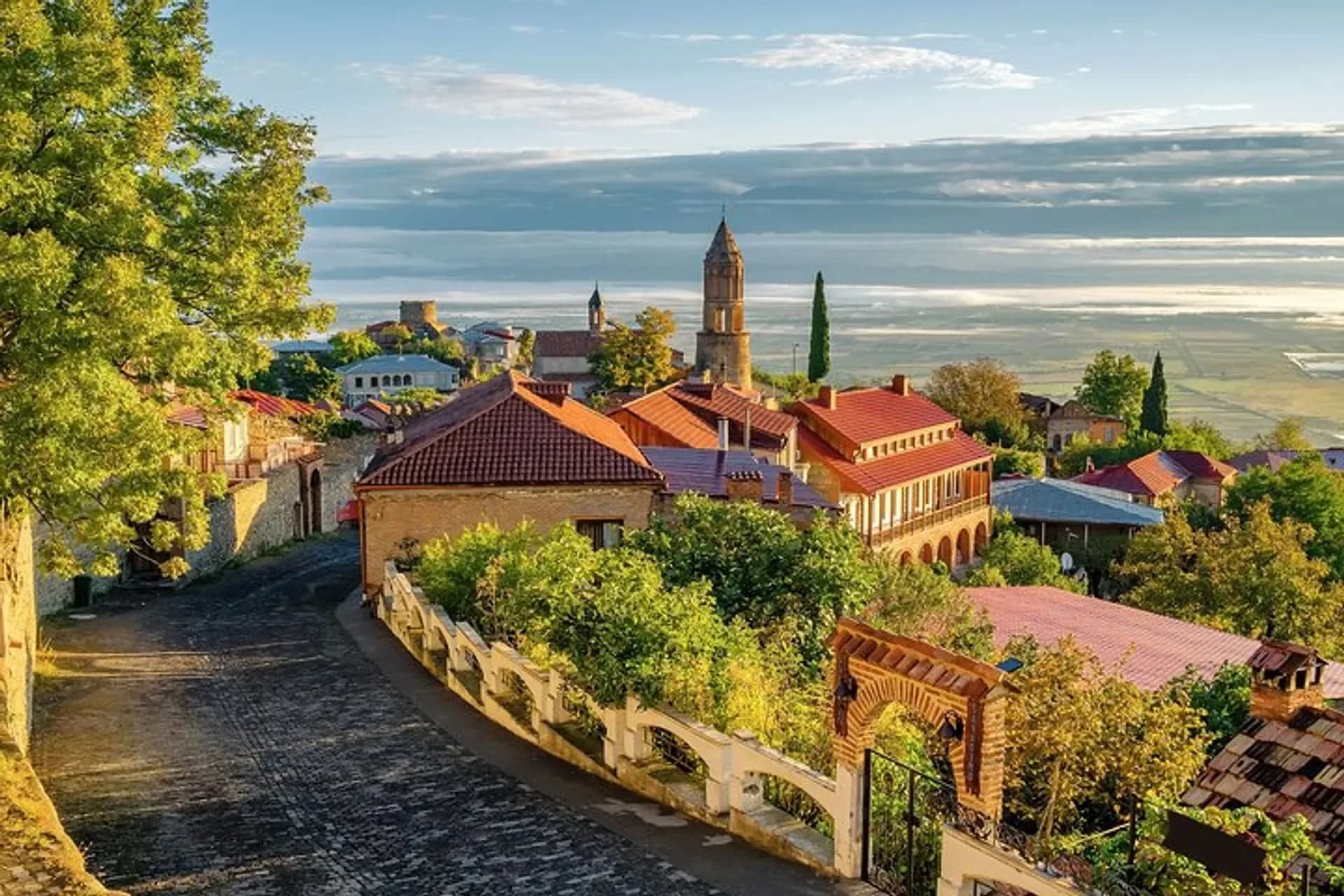
Perched on a ridgeline overlooking the Alazani Valley with the snow-capped peaks of the Caucasus behind it, Sighnaghi is absurdly beautiful. Pastel-painted houses, cobblestone streets, medieval walls still intact, and a panorama so photogenic it barely looks real. It's become something of a weekend destination for Tbilisi residents — which means the restaurant and accommodation scene is excellent, but you want to visit on a weekday to enjoy it at its best.
The winery that defines Sighnaghi is Pheasant's Tears — a landmark of the natural wine movement, founded by American painter John Wurdeman and Georgian winemaker Gela Patalishvili. Their tasting room is small, the wines are extraordinary, and the philosophy behind them is worth two hours of conversation.
Gurjaani — Off the Map, Onto the Table
For travelers who want to leave the tourist circuit entirely, Gurjaani district delivers the most authentic experience in Kakheti. The villages here are quiet, the winemakers are farmers first and businesspeople never, and the tastings feel like genuine hospitality rather than commerce. This is where your guide's local relationships matter most — without an introduction, you simply wouldn't find these places.
A Day-by-Day Look at a Small Group Kakheti Wine Tour from Tbilisi
Our full-day small group wine tasting tour runs from Tbilisi and is designed to give you depth rather than a checklist. Here's how a typical day unfolds:
08:30 — Hotel pickup in Tbilisi Your guide and driver collect you from your central Tbilisi hotel. The group is a maximum of 8 people — small enough to feel personal, large enough to keep the energy social. Coffee and snacks on the road.
10:30 — First winery: traditional qvevri cellar Arrival at a family estate outside Telavi. Your guide introduces you to the winemaker, who walks you through the qvevri winemaking process from harvest to bottling. Tasting: 4-5 wines including amber Rkatsiteli, skin-contact Mtsvane, and aged Saperavi.
13:00 — Traditional Georgian supra lunch Lunch at a family-run estate restaurant — not a tourist menu, but a genuine spread of Georgian dishes: badrijani nigvzit (eggplant with walnut paste), lobiani (bean bread), shkmeruli (garlic chicken), churchkhela, fresh cheese, and more wine than you planned for. The tamada leads toasts. Phones go away.
15:00 — Sighnaghi old town An hour to walk the old town walls, browse the small wine shops, and take in the valley view. Your guide knows the best spots — and the best local wine shop where prices are honest.
16:00 — Second winery: natural wine focus A boutique producer making wines with minimal intervention. Smaller volumes, more experimental, and a completely different conversation than the morning. This is where guests who thought they didn't like wine start reconsidering.
18:30 — Return to Tbilisi Back at your hotel, considerably happier than when you left.
Practical Tips for Your Kakheti Wine Tasting Tour
Eat before you taste. Georgian amber wines can reach 14-15% ABV. On an empty stomach, even experienced wine drinkers find themselves overwhelmed before lunch.
Bring a cooler bag or ask your guide. If you plan to buy bottles to take home — and you will — a small insulated bag protects your purchases on the drive back. Winery prices are typically 30-50% less than Tbilisi retail.
The best months are April-June and September-November. Spring brings wildflower vineyards and cool cellars. Autumn brings the harvest — if you visit in late September or October, you may be able to participate in the rtveli (grape harvest) at some family estates. Book early: this period fills up fast.
Dress comfortably and practically. Wine cellars are cool even in summer, vineyard paths are uneven, and supras tend to go long. Layers, comfortable shoes, and no white clothing are the practical choices.
Don't refuse a toast. In Georgian wine culture, refusing the tamada's toast is genuinely impolite. If you don't drink alcohol, tell your guide in advance — they'll make sure you have grape juice or water and are included in the toasting gracefully.
FAQ: Small Group Wine Tasting Kakheti 2026
How far is Kakheti from Tbilisi? The main wine towns are 1.5-2 hours from central Tbilisi by car. Telavi is about 90 minutes, Sighnaghi around 2 hours. Your tour includes comfortable door-to-door transport, so the drive is part of the experience, not a burden.
Do I need to know anything about wine before coming? Absolutely not. Some of the most engaged guests on our tours are complete beginners — Georgian wine is so different from anything else that prior knowledge barely applies anyway. Your guide explains everything in context, at the winery, while you're tasting. No lectures, no homework.
How many wines will I taste on the tour? Typically 8-12 wines across two winery visits, plus wine with lunch. You'll taste a range of styles — amber, white, red, and possibly a sparkling or chacha (Georgian grape spirit) if the winemaker offers.
Can I buy wine to take home? Yes, and we strongly encourage it. Most family wineries sell directly at cellar-door prices that are significantly below what you'd pay in Tbilisi wine shops or internationally. Your guide can advise on which bottles travel well and help arrange packaging if you're flying home.
Is the tour suitable for non-drinkers? Yes. Let us know when booking and your guide will ensure you're included in every part of the experience — the cellar tours, the supra lunch, the village exploration — with non-alcoholic alternatives for the tastings. Georgian food and culture are rich enough to make the day wonderful regardless.
Written by Author
Author