
Mtskheta Day Trip from Tbilisi:UNESCO Heritage in 30 Minutes
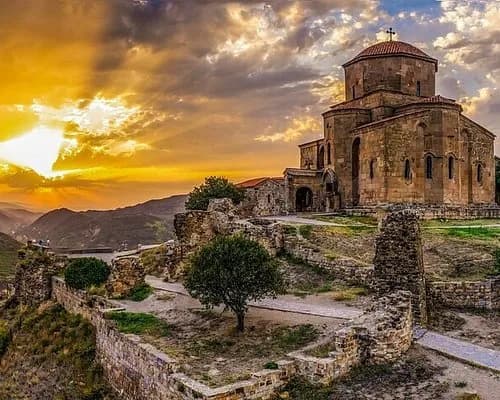
Mtskheta sits just 25 kilometers north of Tbilisi, but its importance to Georgia is immeasurable. This was the country's capital for nearly a thousand years, the place where Christianity was adopted as the state religion in 337 AD, and home to two of the most significant religious monuments in the Caucasus. Both are UNESCO World Heritage Sites, both are still active places of worship, and both can be visited comfortably in half a day.
If you have limited time in Georgia and can only manage one day trip, Mtskheta delivers the highest concentration of historical significance per hour of any destination near the capital.
Jvari Monastery — Where Georgia Became Christian
Perched on a rocky hilltop at the confluence of the Mtkvari and Aragvi rivers, Jvari Monastery is one of the earliest examples of Georgian ecclesiastical architecture. Built between 586 and 605 AD, it's a masterpiece of proportion — a compact, cross-shaped structure that seems to grow naturally from the rock it sits on.
The name "Jvari" means "cross," and according to tradition, this is where Saint Nino erected a large wooden cross after converting the Georgian king to Christianity. The cross, visible from the valley below, became a symbol of the new faith and drew pilgrims from across the region.
Today, the views alone justify the visit. Looking down from the monastery terrace, you can see exactly where the two rivers merge — the muddy Mtkvari and the clearer Aragvi creating a visible line where their waters meet. Mtskheta town spreads below, with the dome of Svetitskhoveli Cathedral rising from its center.
Access note: There's no public transport directly to Jvari — the monastery sits atop a hill accessible only by car or a steep 3-kilometer walk. Organized tours or taxis from Mtskheta town (about 10 GEL round trip with waiting) are the practical options.
Svetitskhoveli Cathedral — The Spiritual Center
Down in Mtskheta town, Svetitskhoveli Cathedral has been the center of Georgian Christianity for over a thousand years. The current structure, built in the early 11th century by architect Arsukisdze, replaced earlier churches on the same site — some dating back to the 4th century.
The cathedral is both a church and a repository of Georgia's most sacred traditions. According to legend, the seamless robe of Jesus Christ is buried beneath the nave, brought to Georgia by a Jewish man from Mtskheta who witnessed the Crucifixion. Whether you approach the story as history or faith, the reverence with which Georgians treat this site is palpable.
Inside, the cathedral is vast — far larger than it appears from outside. Faded frescoes cover the walls, including a striking zodiac cycle and scenes from Georgian royal history. The stone carvings on the exterior facades show everything from grapevines to mythical creatures, reflecting the blend of Christian and pre-Christian symbolism that characterizes early Georgian art.
Visiting etiquette: Svetitskhoveli is an active cathedral with regular services. Dress modestly — women should cover their heads (scarves are available at the entrance), and shorts or sleeveless tops are not permitted. Photography is allowed inside but be respectful of worshippers.
Samtavro Monastery
A five-minute walk from Svetitskhoveli, Samtavro Monastery is less visited but equally significant. This is where Saint Nino reportedly lived and prayed during her time in Mtskheta, and the complex includes the burial site of King Mirian III and Queen Nana — the first Georgian royals to convert to Christianity.
The monastery church has been recently restored, and the contrast between its bright frescoes and Svetitskhoveli's aged patina gives you a sense of how these buildings looked when they were new.
How to Get to Mtskheta from Tbilisi
By marshrutka: Minibuses depart every 10–15 minutes from Tbilisi's Didube metro station. The ride takes 20–30 minutes and costs approximately 1 GEL. They drop you at Mtskheta's main road, a short walk from Svetitskhoveli.
By taxi: A taxi from central Tbilisi takes 25–35 minutes and costs 20–30 GEL. Using Bolt or Maxim apps gives you upfront pricing.
By organized tour: A guided Mtskheta tour includes transport, a knowledgeable guide who explains the historical and religious context, and covers Jvari (which is difficult to reach independently without a car). Many tours combine Mtskheta with other stops — it's a natural pairing with the first section of the Kazbegi route or with Uplistsikhe and Gori.
How Much Time Do You Need?
A focused visit to Jvari and Svetitskhoveli takes 2–3 hours. Adding Samtavro and a relaxed lunch in town extends the visit to 4–5 hours. Mtskheta is genuinely a half-day trip, which makes it ideal for travelers with limited schedules or as a complement to an afternoon in Tbilisi.
Where to Eat in Mtskheta
Several restaurants near Svetitskhoveli offer traditional Georgian food at reasonable prices. Look for places with outdoor terraces — eating khachapuri with a view of the cathedral is one of those simple pleasures that stays with you.
The local specialty is lobiani — bean-filled bread that's Mtskheta's answer to khachapuri. Pair it with a glass of local wine and you've had one of Georgia's most satisfying budget meals.
Best Time to Visit Mtskheta
Mtskheta is a year-round destination. Spring and autumn offer the most comfortable temperatures for walking between sites. Summer is hot but manageable since most time is spent inside stone buildings. Winter brings a quiet, atmospheric quality — fewer tourists and the possibility of light snow on the monastery rooftops.
For religious festivals, Svetitskhoveli Cathedral hosts significant celebrations on October 14 (Svetitskhovloba) and other Georgian Orthodox holidays. These are crowded but culturally fascinating.
Frequently Asked Questions
Is Mtskheta worth visiting?
Absolutely. As Georgia's ancient capital and spiritual center, Mtskheta offers more historical significance per square meter than almost anywhere else in the Caucasus. The UNESCO-listed monuments alone make it essential, and the 30-minute proximity to Tbilisi removes any logistical barriers.
Can I combine Mtskheta with other day trips?
Yes — Mtskheta is commonly paired with Kazbegi (as it lies on the route north) or with Gori and Uplistsikhe (heading west). See our day trips from Tbilisi overview for efficient combinations.
Do I need a guide for Mtskheta?
You can visit independently, but the sites are significantly more meaningful with historical context. Without explanation, Svetitskhoveli is a beautiful old church. With a guide, it becomes a window into 1,700 years of Georgian identity.
Is Mtskheta free to visit?
All churches and monasteries in Mtskheta are free to enter. There's no entrance fee for Jvari, Svetitskhoveli, or Samtavro.
See Georgia's spiritual heart with a guide who brings the history to life. Book a Mtskheta day trip — half-day tours from Tbilisi with hotel pickup included.
Written by Author
Author