
Travel in Georgia: The Ultimate Day Trip to Vardzia, Rabati, and Borjomi
If you only have time for one epic historical adventure in Georgia, this is it.
While Tbilisi offers city charm and Kazbegi offers mountain peaks, the route to the south-west takes you through the very backbone of Georgian history. By 2026, the Vardzia-Rabati-Borjomi route has become one of the most sought-after itineraries for travelers who want to see the dramatic diversity of the country in a single day.
Imagine starting your morning drinking volcanic mineral water in a lush green valley, spending your afternoon in a medieval fortress that looks like it belongs in "Game of Thrones," and ending your day climbing a 12th-century city carved entirely into a cliff face.
This is a long journey, covering over 500 kilometers round-trip, but the rewards are unmatched. Here is your essential guide to conquering Georgia’s "Golden Ring" of history.
Stop 1: Borjomi – Nature’s Healing Waters
Your journey begins with a drive through the scenic Kartli region into the Borjomi Gorge. Famous throughout the former Soviet Union and beyond, Borjomi is synonymous with its salty, volcanic mineral water.
In 2026, the Borjomi Central Park has been beautifully maintained, offering a mix of ecological tourism and imperial history. This was the summer retreat of the Romanov Tsars, and you can still feel that aristocratic atmosphere.
What not to miss:
Taste the Water: Visit the blue pavilion with the glass roof to drink the warm mineral water straight from the spring. Warning: It tastes much stronger and more sulfuric than the bottled version!
The Waterfall: A short walk through the park leads to a stunning waterfall adorned with a statue of Prometheus.
Nature Therapy: Take a deep breath. The mix of pine forests and mountain air is considered healing for respiratory systems.
Tip for Nature Lovers: If you prefer to spend your entire day just in nature (skipping the history), you might want to consider a dedicated nature trip instead. Our Private Borjomi and Bakuriani day tour allows you to linger longer in the forests and ride the cable cars.
Stop 2: Rabati Castle – Where East Meets West
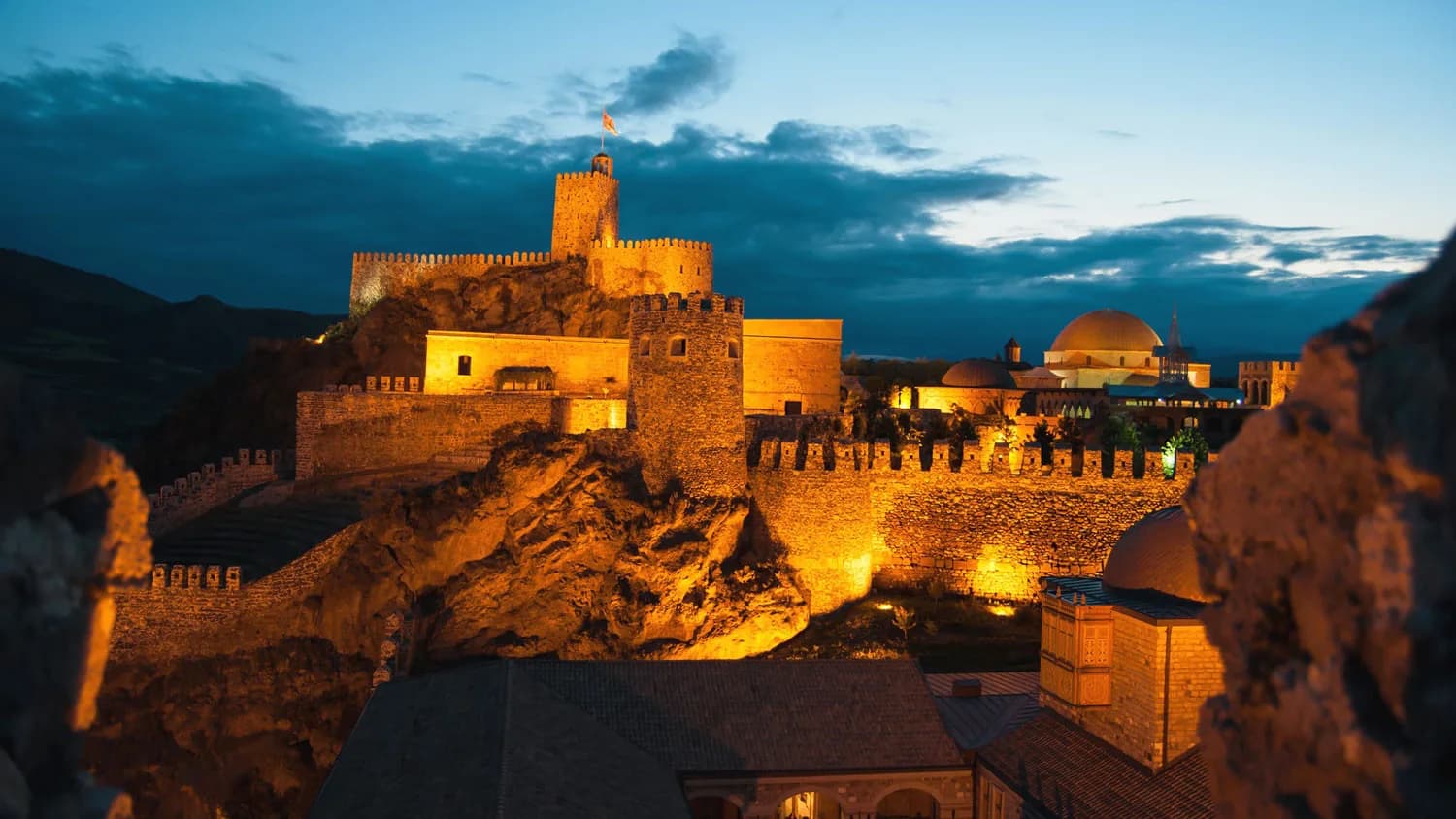
Leaving the green gorge, the landscape changes to the arid, rocky terrain of the Samtskhe-Javakheti region. Here lies the city of Akhaltsikhe, dominated by the massive Rabati Castle.
Restored significantly in recent years, Rabati is unique because it represents the multicultural history of Georgia. Inside the fortress walls, you will find a Georgian Orthodox church, a Mosque, a Minaret, a Synagogue, and an Armenian church standing side by side. It is a physical symbol of tolerance.
Why it’s impressive:
The architecture is a fusion of Ottoman and Georgian styles. You can climb the watchtowers for a panoramic view of the city or wander through the perfectly manicured gardens that connect the upper (historical) and lower (modern) parts of the fortress.
Stop 3: Vardzia – The Cave City of Queen Tamar
The final and most spectacular stop is Vardzia.
Carved into the side of the Erusheti Mountain in the 12th century, this wasn't just a monastery—it was a fully functioning city hidden from Mongol invaders. Under the reign of the legendary Queen Tamar, it housed thousands of monks and residents.
Exploring the Caves:
In 2026, safety infrastructure (railings and lights) has improved, making the climb accessible for most active travelers. You will walk through ancient refectories, wine cellars (maranis), and the central Church of the Dormition, which still features original 12th-century frescoes of Queen Tamar.
Standing on a narrow rock ledge, looking out over the Mtkvari River valley below, is a spiritual and humbling experience. It makes you realize the sheer determination of the people who built this sanctuary by hand.
The Challenge: How to Visit All Three in One Day?
Here is the reality: visiting Borjomi, Rabati, and Vardzia in one day involves a lot of driving (approximately 3.5 to 4 hours each way from Tbilisi).
Driving Yourself vs. Guided Tour
Self-Drive: We generally advise against renting a car for this specific route unless you are a very confident driver. The day is long, the roads can be winding, and navigating rural Georgia at night (on the way back) can be stressful.
Guided Tour: This is the most efficient way. You can sleep in the comfortable minivan during the transit sections and save your energy for the hiking and exploring. Plus, having a guide explains the deep history connecting these three sites, which you would miss otherwise.
Our Solution:
We have crafted the perfect logistical plan to ensure you see everything without feeling rushed. Our Vardzia, Rabati, and Borjomi Guided Day Tour is one of our best-sellers for a reason. We handle the driving, the timing, and the tickets, so you can focus on the time travel.
Practical Tips for the Trip
Wear Comfortable Shoes: Vardzia involves stairs and uneven rocky paths. Flip-flops or heels are a bad idea.
Dress Modestly: To enter the churches in Vardzia and Rabati, women need to cover their heads (scarf) and wear skirts (wraps are usually available), and men should not wear shorts.
Bring Snacks: While the tour includes lunch stops, the drive is long. Having water and snacks is always smart.
Conclusion
The Vardzia-Rabati-Borjomi route is more than just sightseeing; it’s a lesson in resilience, architecture, and nature. From the healing waters of the 19th century to the cave dwellings of the 12th century, you cover 800 years of history in about 12 hours.
It’s a long day, but when you see the sunset hitting the golden walls of Rabati, you will know it was worth every mile.
Frequently Asked Questions (FAQs)
Q: Is the Vardzia tour suitable for children or elderly people?
A: Borjomi and Rabati are very accessible. However, Vardzia involves climbing steep stairs and walking on cliff edges. It might be difficult for toddlers, people with mobility issues, or those with a severe fear of heights.
Q: What if I want to see history but don't want to drive so far?
A: If a 12-hour day feels too long, we recommend exploring the ancient capital near Tbilisi instead. Our Mtskheta, Gori, and Uplistsikhe Historical Tour offers a similar "Cave City + History" experience but requires much less driving time.
Q: Are there lunch options during the tour?
A: Yes. The route passes through areas famous for Meskhian cuisine. Your guide will stop at trusted local restaurants where you can try regional specialties like Apokhti (salted meat) Khinkali or snails (a local delicacy!).
Written by Author
Author