Wine & Gastronomy
Georgian Wine: An 8,000-Year History & Best Regions to Visit
Author

Loading
Preparing your travel experience.
When archaeologists uncovered clay fragments stained with grape residue in the village of Gadachrili Gora, south of Tbilisi, they confirmed what Georgians had long believed: this is where wine began. The fragments dated to approximately 6000 BC, pushing the origins of winemaking back a full 1,000 years earlier than previously documented — to a time before the wheel, before writing, before bronze.
Eight millennia later, Georgia remains one of the world's most distinctive wine cultures. Not because of scale — the country produces a fraction of France's or Italy's output — but because the traditional methods have survived virtually intact. Understanding Georgian wine means understanding qvevri, the 525 indigenous grape varieties, and the cultural rituals that make wine inseparable from Georgian identity.
A qvevri is a large, egg-shaped clay vessel — sometimes holding over 2,000 liters — buried underground with only the opening visible at floor level. Grapes go in whole: juice, skins, seeds, and sometimes stems together. The qvevri is sealed with a stone lid and clay, and the wine ferments and ages underground for five to six months.
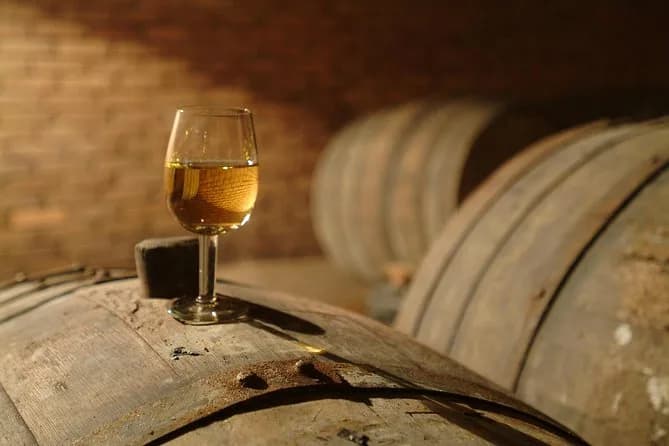
The buried vessel maintains a naturally stable temperature (around 14–15°C year-round), and the extended skin contact produces wines with a depth and texture that conventional methods can't replicate. White grapes processed this way produce amber wine — deep golden in color, tannic on the palate, and absolutely unlike any Chardonnay or Sauvignon Blanc you've encountered.
In 2013, UNESCO inscribed the qvevri winemaking method on its list of Intangible Cultural Heritage — recognition that this isn't just a production technique but a living tradition that defines Georgian cultural identity.
Georgia has 18 officially recognized appellations spread across several distinct regions. Here are the ones most accessible and interesting for visitors.
Producing around 70% of Georgia's wine, Kakheti is the region most visitors experience. The Alazani Valley, flanked by the Greater Caucasus mountains to the north, provides ideal growing conditions: warm days, cool nights, and well-drained soils.
Key grapes: Saperavi (red), Rkatsiteli (white/amber), Mtsvane (white/amber)
Key towns: Sighnaghi, Telavi, Kvareli, Tsinandali
What to expect: A mix of large commercial wineries, medium-sized estates, and tiny family cellars. The family operations — where the winemaker might be a retired engineer or a grandmother who learned from her grandmother — are where the most memorable tastings happen.
A Kakheti wine tour from Tbilisi is the most popular way to explore this region, covering 2–3 wineries along with Sighnaghi and Bodbe Monastery.
West of Tbilisi, Kartli is one of Georgia's oldest wine regions, though less touristed than Kakheti. The wines here tend to be lighter and more acidic than Kakheti's, with a freshness that reflects the slightly cooler climate.
Key grapes: Chinuri, Goruli Mtsvane, Tavkveri
What to expect: Fewer organized wine tours, more opportunity for genuine off-the-beaten-path discovery. The region is home to some of Georgia's most experimental natural winemakers.
Centered around Kutaisi, Georgia's second-largest city, Imereti produces wines that differ markedly from eastern Georgian styles. Winemakers here traditionally use less skin contact than in Kakheti, resulting in lighter, more delicate wines.
Key grapes: Tsolikouri, Tsitska, Krakhuna, Otskhanuri Sapere
What to expect: A growing number of small producers opening their doors to visitors. Combine a winery visit with a Kutaisi day tour that includes Prometheus Cave and Gelati Monastery.
This mountainous northwestern region produces Georgia's rarest wines in tiny quantities. The most famous is Khvanchkara — a naturally semi-sweet red that was reportedly Stalin's favorite wine (for whatever that recommendation is worth).
Key grapes: Alexandrouli, Mujuretuli, Usakhelouri
What to expect: Very limited tourist infrastructure, but extraordinary landscapes and wines you simply cannot find elsewhere. A visit requires more planning and ideally a private tour with a knowledgeable guide.
Georgia has 525 identified grape varieties — more than almost any country on Earth. Most visitors encounter these:
Saperavi — Georgia's flagship red. Deeply colored (the name means "dye"), full-bodied, with dark fruit and a tannic structure that ages well. If you try one Georgian red, make it Saperavi.
Rkatsiteli — The most planted white grape, used both for conventional white wines and amber wines made in qvevri. In amber form, it develops notes of dried fruit, honey, and tea.
Mtsvane — Often blended with Rkatsiteli, Mtsvane adds aromatic complexity — floral and herbal notes that lift the heavier Rkatsiteli.
Kisi — A variety experiencing a renaissance among natural winemakers. Amber Kisi wines are aromatic and complex, with a loyal following among wine enthusiasts globally.
Georgian wine cannot be fully understood without the supra — the traditional feast governed by a tamada (toastmaster). The tamada proposes a series of toasts — to God, to Georgia, to family, to ancestors, to friends — and each toast is followed by wine.
The supra is not about getting drunk (though wine flows freely). It's a structured social ritual where storytelling, emotion, and communal identity are expressed through the shared act of drinking. Refusing wine isn't offensive — but participating in the toasts, even with small sips, connects you to something genuinely ancient.
2–3 days: A Kakheti wine tour from Tbilisi plus wine bars and tastings in Tbilisi itself covers the essentials.
5–7 days: Add Kartli region wineries, a visit to the Georgian National Wine Agency in Tbilisi, and time in Sighnaghi or Telavi for overnight stays in wine country.
10+ days: Extend to Imereti and potentially Racha-Lechkhumi for the deepest possible immersion.
Is Georgia really the birthplace of wine?
The archaeological evidence supports it. The 8,000-year-old residue found at Gadachrili Gora is the oldest chemical evidence of grape wine fermentation ever discovered.
What does amber wine taste like?
Amber wine (sometimes called orange wine internationally) has a rich, tannic texture more similar to light red wine than to conventional whites. Expect notes of dried apricot, honey, tea, and sometimes a pleasant oxidative quality. It's an acquired taste that many visitors end up loving.
Can I buy Georgian wine abroad?
Georgian wine exports have grown significantly, particularly to Europe, Japan, and the US. However, the most interesting small-producer and family-made wines are rarely exported. Buying directly at wineries and bringing bottles home remains the best way to access the finest wines.
How much does wine cost in Georgia?
A good bottle at a winery costs 15–40 GEL ($5–15). Premium and reserve wines run 50–150 GEL. In Tbilisi restaurants, expect 20–60 GEL per bottle. Wine is remarkably affordable compared to Western European standards.
Taste 8,000 years of tradition. Browse our wine tours — from single-day Kakheti tastings to multi-day wine immersions across Georgia's best regions.
Written by Author
Author